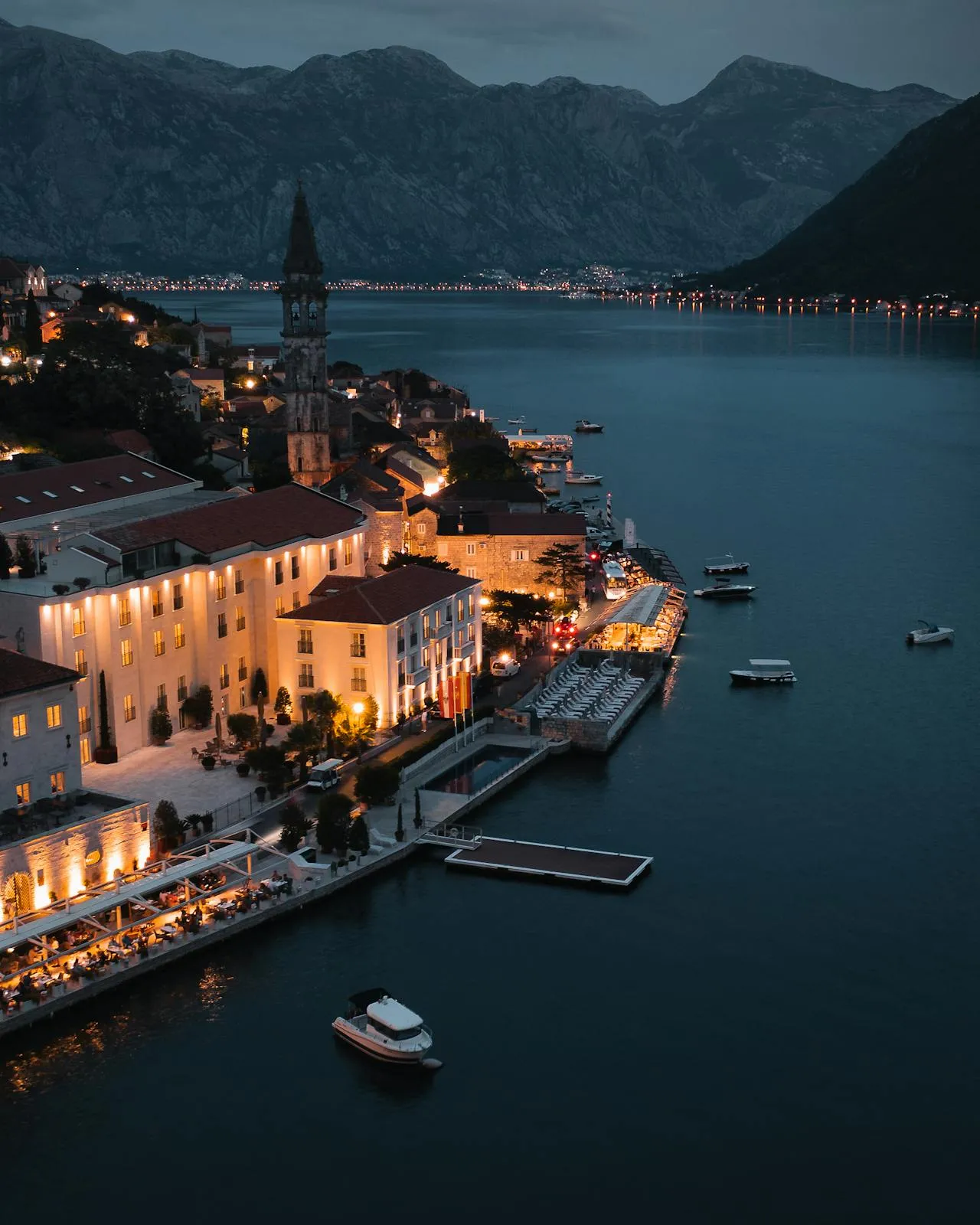
The Drive That Earns Every View
The road from Podgorica to Kotor is not just transport, it is the headline act. You climb from the capital's 44-metre river plain up and over the Lovćen massif, carving through 25 numbered hairpin bends with the Bay of Kotor slowly unfolding below. On a clear morning, the water glows turquoise against the limestone cliffs. The descent into the bay is one of Europe's great driving experiences.
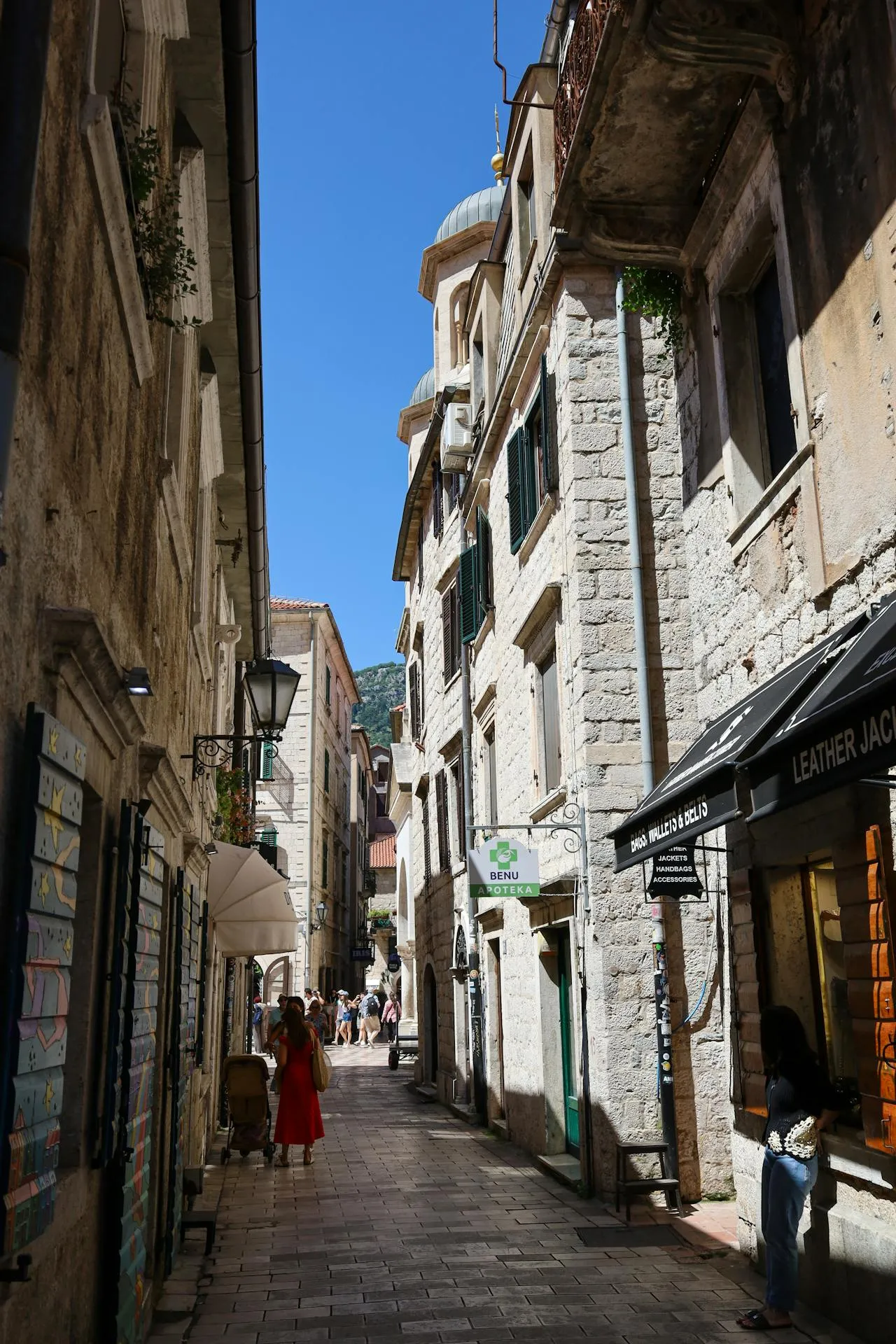
Kotor itself is a medieval walled city wedged between the bay and the steep flanks of Mount St. John. listed the old town and its natural setting together, and once you arrive the reason is obvious. Narrow limestone streets open into tiny squares, cats sleep on windowsills, and fortress walls zigzag 1,200 metres up the mountainside above.
Inside the Walls
St. John Fortress
The 1,350-step climb to the fortress ruins above Kotor is the must-do activity. Start early, the afternoon heat makes the ascent punishing. At the top, the entire bay spreads out below, cruise ships looking like bath toys. The Contarini Tower and the Church of Our Lady of Health mark the halfway point.
St. Tryphon Cathedral
First built in 809 AD and reconstructed after an earthquake in 1667, this Romanesque cathedral anchors the old town. The twin bell towers are Kotor's most recognisable silhouette, and the treasury inside holds gold and silver relics spanning nine centuries.
Side Trips from Kotor
Perast is 20 minutes north along the bay, a single-street baroque village with two island churches offshore. A boat to Our Lady of the Rocks costs about EUR 5 return. Fishermen have been dropping rocks to build the island since 1452, and the tradition continues every July 22nd.
Drive back up the switchbacks and continue south to Cetinje, Montenegro's former royal capital. The route takes about an hour through dense mountain forest and opens into a wide valley at 670 metres. The monastery houses a relic believed to be the hand of John the Baptist.
King Nikola's Palace sits next to the monastery, built in 1871, it displays the furnishings and photographs of Montenegro's brief era as a kingdom. The National Museum across the street covers everything from medieval icons to the 2006 independence vote. Car hire from Tivat Airport is the quickest way to reach the bay.